
SPEAKERS
|
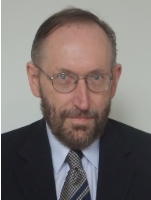
Prof. Witold Pedrycz, IEEE Fellow, University of Alberta, Canada (H: 107)
|
Witold Pedrycz (IEEE Fellow, 1998) is a Professor and Canada Research Chair (CRC) in Computational Intelligence in the Department of Electrical and Computer Engineering, University of Alberta, Edmonton, Canada.
He is also with the Systems Research Institute of the Polish Academy of Sciences, Warsaw, Poland.
In 2009, Dr. Pedrycz was elected a foreign member of the Polish Academy of Sciences.
In 2012, he was elected a Fellow of the Royal Society of Canada. Witold Pedrycz has been a member of numerous program committees of IEEE conferences in the areas of fuzzy sets and neurocomputing.
In 2007, he received the prestigious Norbert Wiener Award from the IEEE Systems, Man, and Cybernetics Society.
He is a recipient of the IEEE Canada Computer Engineering Medal, the Cajastur Prize for Soft Computing from the European Centre for Soft Computing, the Killam Prize, and the Fuzzy Pioneer Award from the IEEE Computational Intelligence Society.
His main research directions involve Computational Intelligence, fuzzy modeling and Granular Computing, knowledge discovery and data mining, fuzzy control, pattern recognition, knowledge-based neural networks, relational computing, and software engineering. He has published numerous papers in these areas. He is also the author of 15 research monographs covering various aspects of Computational Intelligence, data mining, and software engineering.
Dr. Pedrycz is highly active in editorial work. He is Editor-in-Chief of Information Sciences, Editor-in-Chief of WIREs Data Mining and Knowledge Discovery (Wiley), and the Int. J. of Granular Computing (Springer).
He currently serves on the Advisory Board of IEEE Transactions on Fuzzy Systems and is a member of the editorial boards of several other international journals.
|
|
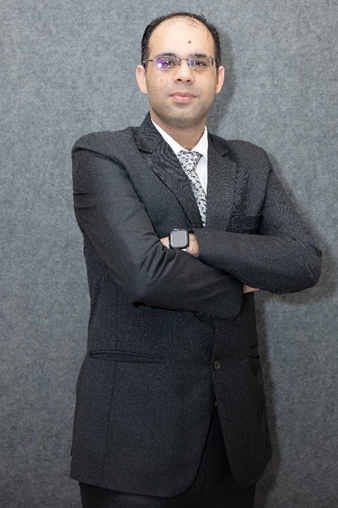
Prof. Anand Nayyar, Duy Tan University, Vietnam
|
Dr. Anand Nayyar received Ph.D (Computer Science) from Desh Bhagat University in 2017 in the area of Wireless Sensor Networks, Swarm Intelligence and Network Simulation. He is currently working in School of Computer Science-Duy Tan University, Da Nang, Vietnam as Professor, Scientist, Vice-Chairman (Research) and Director- IoT and Intelligent Systems Lab. A Certified Professional with 125+ Professional certifications from CISCO, Microsoft, Amazon, EC-Council, Oracle, Google, Beingcert, EXIN, GAQM, Cyberoam and many more. Published more than 200+ Research Papers in various High-Quality ISI-SCI/SCIE/SSCI Impact Factor- Q1, Q2, Q3, Q4 Journals cum Scopus/ESCI indexed Journals, 80+ Papers in International Conferences indexed with Springer, IEEE and ACM Digital Library, 60+ Book Chapters in various SCOPUS/WEB OF SCIENCE Indexed Books with Springer, CRC Press, Wiley, IET, Elsevier with Citations: (Google Scholar): 15300+, H-Index: 66 and I-Index: 247; (Scopus): 8000+; H-index: 47. Member of more than 60+ Associations as Senior and Life Member like: IEEE (Senior Member) and ACM (Senior Member). He has authored/co-authored cum Edited 60+ Books of Computer Science. Associated with more than 600+ International Conferences as Programme Committee/Chair/Advisory Board/Review Board member. He has completed 1 Grassroot and 1 ASEAN Project. He has 18 Australian Patents, 14 German Patents, 4 Japanese Patents, 40 Indian Design cum Utility Patents, 13 UK Patents, 1 USA Patent, 3 Indian Copyrights and 2 Canadian Copyrights to his credit in the area of Wireless Communications, Artificial Intelligence, Cloud Computing, IoT, Healthcare, Drones, Robotics and Image Processing. Awarded 48 Awards for Teaching and Research—Young Scientist, Best Scientist, Best Senior Scientist, Asia Top 50 Academicians and Researchers, Young Researcher Award, Outstanding Researcher Award, Excellence in Teaching, Best Senior Scientist Award, DTU Best Professor and Researcher Award- 2019, 2020-2021, 2022, 2022-2023 Distinguished Scientist Award by National University of Singapore, Obada Prize 2023, Lifetime Achievement Award 2023; Asian Admirable Achievers 2024; Distinguished Academic Leader 2024 and many more.
He is listed in Top 2% Scientists as per Stanford University (2020, 2021, 2022) , Ad Index (Rank No:1 Duy Tan University, Rank No:1 Computer Science in Viet Nam) and Listed on Research.com (Top Scientist of Computer Science in Viet Nam- National Ranking: 2; D-Index: 42; World Ranking: 6968).
He is acting as Associate Editor for Computer Communications (Elsevier), International Journal of Sensor Networks (IJSNET) (Inderscience), Computers Materials and Continua (CMC), Tech Science Press- IASC, Cogent Engineering, Human Centric Computing and Information Sciences (HCIS), PeerJ Computer Science, IET-Quantum Communications, IET Networks, IEEE Transactions on Artificial Intelligence (IEEE TAI), Indonesian Journal of Electrical Engineering and Computer Science, IJFC, IJISP, IJDST, IJCINI, IJGC, IJSIR, IJBDCN, IJNR, IJSI. He is acting as Managing Editor of IGI-Global Journal, USA titled “International Journal of Knowledge and Systems Science (IJKSS)” and Editor-in-Chief of IGI-Global, USA Journal titled “International Journal of Smart Vehicles and Smart Transportation (IJSVST)”. He has reviewed more than 5100+ Articles for diverse Web of Science and Scopus Indexed Journals. He is currently researching in the area of Wireless Sensor Networks, Internet of Things, Swarm Intelligence, Cloud Computing, Artificial Intelligence, Drones, Blockchain, Cyber Security, Healthcare Informatics, Big Data and Wireless Communications.
|
|
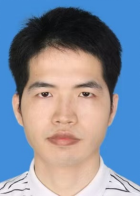
Prof. Jianjun Li, Hangzhou Normal University, Zhejiang, China.
|
Prof. Jianjun Li, Hangzhou Normal University, Zhejiang, China.
Ph.D., Professor and Doctoral Supervisor at Hangzhou Normal University. He is an expert in artificial intelligence and microelectronic technologies. His research covers artificial intelligence, multi-source information fusion, signal processing and circuit design, with outstanding achievements in related fields. For over 30 years, he has conducted research focusing on international video standards, graphic and image processing, biometric recognition and medical image processing, intelligent analysis, detection and recognition based on computer vision, as well as microelectronics and sensor design. He has authored one English monograph and one Chinese monograph, published more than 70 papers in domestic and international journals, and holds over 20 invention patents. His previous appointments include major domestic research institute (CETC), National Centre for Audiology (NCA) in Canada, Mitsubishi Electric Research Laboratories (MERL) in the United States, École Polytechnique Fédérale de Lausanne (EPFL) in Switzerland, Bilkent University and Ankara University in Türkiye, and Hangzhou Dianzi University. Prior to returning to China, he worked as a tenure-track Assistant Professor at Ankara University.
Title: Beyond Accuracy: Understanding Structured Annotation Bias in Trustworthy Medical AI Abstract: Medical AI systems are often trained and evaluated under the assumption that annotation errors are random and that overall overlap metrics, such as Dice, sufficiently characterize model performance. In clinical practice, however, annotation discrepancies are frequently structured and directional: lesion boundaries may be systematically contracted, expanded, or spatially shifted. Even when these errors have similar magnitudes, they can preserve different amounts of foreground evidence and lead to substantially different patterns of under-segmentation, over-segmentation, and boundary error. This talk presents a boundary-sensitive perspective for analyzing directional annotation bias in medical image segmentation. We describe annotation perturbations jointly by their magnitude and signed foreground-area drift, then connect label bias to model behavior through region overlap, boundary quality, error composition, and prediction-area bias. Case studies from skin-lesion and chest X-ray segmentation illustrate how the direction of annotation bias can propagate into model outputs under controlled settings. We also show that such propagation may depend on model architecture, highlighting the need to avoid architecture-independent conclusions. The talk concludes with a practical audit framework for trustworthy medical AI, covering data quality, model robustness, and clinically meaningful evaluation. The central message is that reliable AI requires more than higher accuracy: it requires understanding what bias a model learns, in which direction that bias propagates, and under what conditions the evidence remains valid. |
|
Prof. Juntao Fei, Hohai University, Jiangsu, China.
|
Juntao Fei is now a professor (Level II) at Hohai University, Director of the Institute of Electrical and Control Engineering, Fellow and Life Fellow of IAAM, Senior Member of IEEE, High-Level Innovative and Entrepreneurial Talent of Jiangsu Province. He received his M.S and Ph.D. degree from the University of Akron, USA. He was visiting scholars at University of Virginia, USA, North Carolina State University, USA respectively. He ever served as an assistant professor at the University of Louisiana, USA. He has led more than 30 projects He has published over 200 SCI-indexed papers (50 in IEEE Transactions series), among which 25 are ESI Highly Cited Papers and 4 are Hot Papers. He holds over 100 authorized national invention patents and has published 5 monographs. He has twice received provincial/ministerial level awards for scientific and technological progress. He currently serves as an Associate Editor for four SCI-indexed journals. He has been recognized as a Highly Cited Chinese Researcher by Elsevier, a top 0.05% scholar by ScholarGPS, and a top 2% scientist by Stanford University. His current research interests are neural network, fuzzy control, artificial intelligence, mechatronics and robotics .
Title: Fuzzy Neural Network Complementary Sliding Mode Control: Methodology and Application
Abstract: In this speech, a complementary sliding mode controller using a self-constructing Chebyshev fuzzy recurrent neural network (SCCFRNN) is proposed for harmonic suppression control of an active power filter (APF). The SCCFRNN whose structure can be automatically learned through the designed structure self-learning algorithm is introduced to approximate the unknown nonlinear term in APF dynamic model, so as to improve modeling accuracy and reduce the burden of complementary sliding mode control (CSMC). The SCCFRNN, combines the advantages of fuzzy neural network (FNN), recurrent neural network (RNN) and Chebyshev neural network (CNN), and all parameters can be adjusted according to the designed adaptive laws. Both the simulation and experimental comparisons illustrate S the feasibility and superiority of the proposed control algorithm under different test conditions. |
|
Prof. Yinyan Zhang, Jinan University, Guangzhou, China.IEEE Senior Member
|
Yinyan Zhang is currently a professor with the School of Cyber Security, Jinan University, Guangzhou, China. He is an IEEE Senior Member. He earned his Ph.D. from the Hong Kong Polytechnic University and served as a postdoctoral researcher there. His research primarily focuses on fundamental theories of artificial intelligence and intelligent control. He has led two national-level projects, including a National Natural Science Foundation General Program. He serves on the editorial boards of several SCI journals, such as IEEE Transactions on Industrial Electronics, Neural Processing Letters, and Scientific Reports. He is named in the world's top 2% of Scientists List.
Title: Neurodynamics for distributed k-winners-take-all of multi-agent systems
Abstract: IIn this talk, the analysis and design of neurodymics for distributed k-winners-take-all of multi-agent systems will be discussed.
|